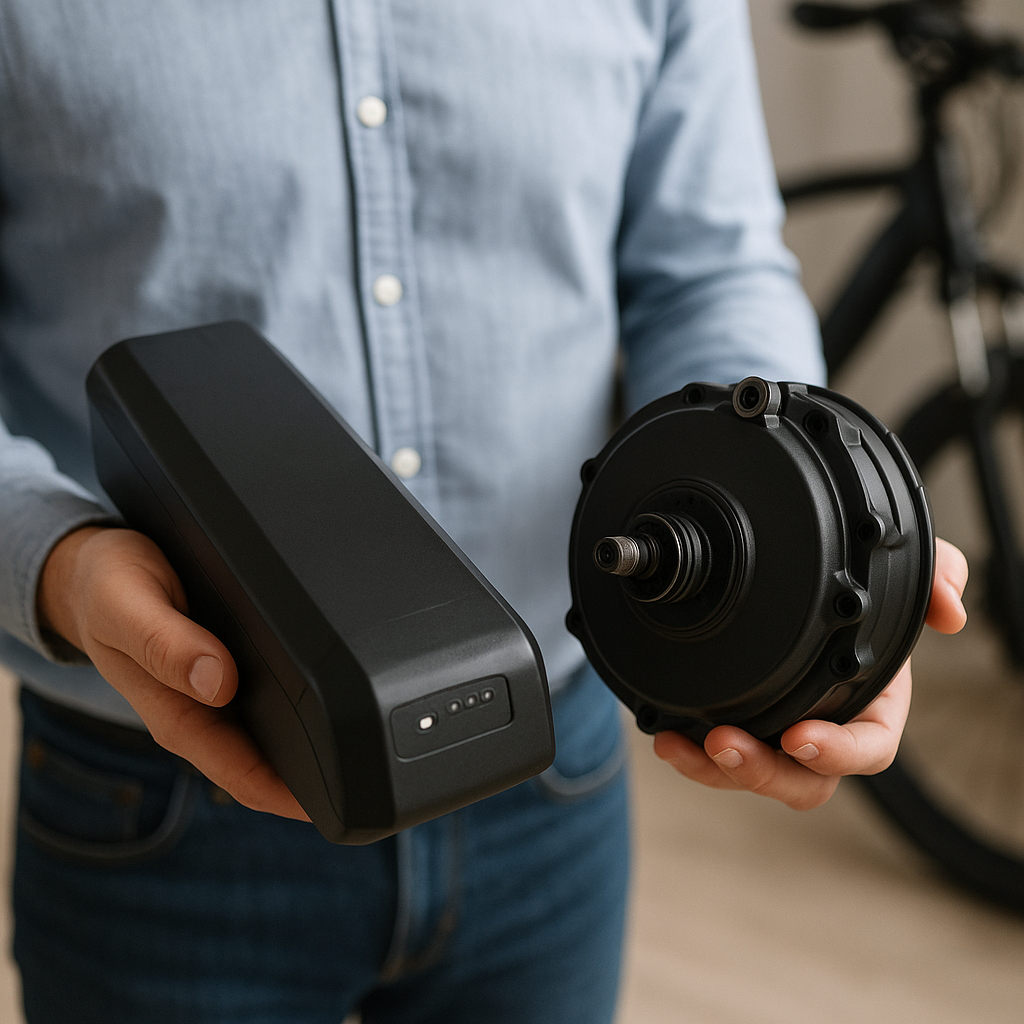
Electric bicycles have revolutionized urban and off-road cycling by offering riders a powerful blend of pedal assistance and convenience. Choosing the right components is crucial to ensure a smooth, efficient, and enjoyable ride. This guide will walk you through the essentials of selecting an e-bike battery and motor setup that aligns with your riding needs and budget.
Understanding Battery Fundamentals
1. Chemistry and Cell Types
The heart of every e-bike system is the battery. Most modern e-bikes rely on lithium-ion cells due to their superior energy density and lifespan. Some manufacturers still offer lead-acid or nickel-metal hydride options, but these are heavier and less efficient.
Key Specifications
- Capacity (Ah): Indicates how much charge the battery can store. A higher amp-hour rating typically translates to longer riding range.
- Voltage (V): Reflects the power potential. Common e-bike voltages are 36 V and 48 V. Higher voltage systems can deliver more power but may require more expensive components.
- Watt-hour (Wh): Calculated by multiplying volts by amp-hours (Wh = V × Ah). It’s the most accurate measure of total energy storage.
2. Impact on Riding Experience
A battery’s weight and size affect the bike’s balance and handling. Smaller batteries are lighter but offer reduced range. Heavier packs provide extended distances but may alter the bike’s center of gravity, impacting agility.
- Compact, integrated batteries create a sleek look but may be harder to replace.
- Removable packs offer easy charging and swapping but might protrude from the frame.
3. Charging and Longevity
Proper charging practices can dramatically extend battery life. Fast chargers reduce turnaround time but can slightly decrease overall cycle life if used excessively. Storing the battery at around 50 % charge in cool conditions helps minimize capacity loss over months of inactivity.
Exploring Motor Configurations
1. Hub Motors vs. Mid-Drive Motors
- Hub motor: Mounted directly on the front or rear wheel. Offers straightforward installation and lower maintenance. However, weight distribution can be uneven, and torque sensing is often less precise.
- Mid-drive: Positioned at the crankset and drives the chain. Provides excellent weight balance and more natural handling. It leverages the bike’s gears for efficient torque delivery, especially on steep climbs.
Performance Metrics
- Torque (Nm): Determines acceleration and climbing ability. Higher torque motors feel more responsive, especially at low speeds.
- Power output (W): Typical e-bike motors range between 250 W and 750 W. European regulations often cap e-bike motors at 250 W for road use, while other regions allow higher-powered kits.
- Efficiency: Measured as the ratio of mechanical output to electrical input. More efficient motors drain the battery less, extending your ride duration.
2. Sensor Types and Control
E-bike systems rely on sensors to determine how much assistance to deliver:
- Speed sensors: Provide basic pedal detection, offering a consistent boost regardless of pedaling pressure.
- Cadence sensors: Detect pedal rotation, activating the motor when the cranks turn.
- Torque sensors: Measure the force you apply to the pedals and adjust output proportionally, creating a smoother, more intuitive ride.
Matching Components to Your Riding Style
1. Commuting vs. Off-Road Adventures
City commuters typically benefit from a balance of range and nimble handling. A mid-drive motor with a 36 V/14 Ah (504 Wh) battery offers ample distance for daily errands while keeping weight manageable. For off-road enthusiasts, prioritize high torque and robust suspension. A 48 V/20 Ah (960 Wh) pack combined with a powerful mid-drive unit ensures sustained performance on steep trails.
2. Weight Distribution and Frame Design
The placement of heavy components influences ride characteristics:
- Down tube integration: Centralizes mass for balanced handling.
- Rear rack mounts: Shifts weight aft, ideal for cargo e-bikes but less agile.
- Front hub motors: Suitable for retrofit projects but can cause understeer in tight corners.
3. Budget Considerations
High-end systems with advanced torque sensors, sealed lithium-ion packs, and premium mid-drive motors command significant investment. Entry-level options offer respectable performance at lower cost but may require compromises in battery lifespan or weight. Establish essential features—such as weatherproofing, removable batteries, or regenerative braking—to guide your spending.
Installation, Maintenance, and Safety
1. Professional vs. DIY Installation
While plug-and-play kits simplify assembly, professional installation ensures proper alignment, secure wiring, and firmware calibration. This reduces the risk of component failure and maximizes system longevity.
2. Routine Care
- Clean connectors and terminals to prevent corrosion.
- Inspect the battery housing for cracks or damage after every few hundred miles.
- Update motor firmware when manufacturers release performance or safety patches.
3. Safety Protocols
Always use the charger provided by the manufacturer to avoid overvoltage or thermal issues. Never expose the battery to extreme heat or open flames. In case of swelling, smoke, or unusual odors, remove the battery from the bike and place it in a fire-resistant container before seeking professional assistance.
Future Trends in E-Bike Technology
1. Solid-State Batteries
Next-generation cells promise even higher capacity and reduced risk of overheating by using solid electrolytes. Although still in development, early prototypes aim to double the energy density of today’s best lithium-ion packs.
2. Integrated Smart Systems
Manufacturers are embedding sensors and Bluetooth connectivity directly into battery modules and motors. Riders can monitor real-time performance, adjust power curves, and receive maintenance alerts via smartphone apps.
3. Modular Power Units
Future e-bikes may feature swappable power modules, allowing riders to quickly adapt their setup for long-distance touring, urban commuting, or cargo hauling without changing the entire bike.