Keeping your bike clean not only enhances its appearance but also extends its lifespan and improves performance. A thorough cleaning routine prevents rust, reduces wear on moving parts, and ensures a smoother ride. This guide will walk you through each step of the process, offering detailed advice and practical tips to clean your bicycle effectively and safely without causing any damage.
Essential Tools and Materials
Before you begin, gather the right tools and supplies. Having everything on hand will make the job faster and more efficient. Here’s what you’ll need:
- Water source – a gentle hose spray or buckets of clean water
- Mild bike-specific soap or gentle dishwashing liquid
- Degreaser – preferably biodegradable and designed for bicycle chains
- A set of soft brushes – various sizes for different components
- Old toothbrushes for tight spots
- Microfiber cloth or soft rags
- Chain cleaning tool (optional but highly effective)
- Protective gloves (to keep hands clean and avoid skin irritation)
- Lubricant – wet or dry lube suitable for your riding conditions
- Bike stand or a secure way to prop up your bicycle
Preparation and Safety Measures
Taking a moment to prepare will prevent accidental damage and keep you safe. Follow these guidelines:
Location Selection
Choose a well-ventilated area with good drainage. Avoid washing your bike on carpeted surfaces that might trap water or soap. A driveway, patio, or garage floor with a drain works best.
Protecting Sensitive Parts
- Remove or cover electronic devices such as cycle computers, lights, or integrated wiring harnesses.
- Avoid direct high-pressure water jets on hubs, bottom bracket, headset bearings, and suspension seals. High pressure can force water into seals, washing out grease.
Securing the Bicycle
Mount your bicycle on a stand or hang it upside down by the saddle and handlebars. This tactic keeps the bike steady and provides easy access to all components, from the drivetrain to the frame.
Step-by-Step Cleaning Process
1. Initial Rinse
Begin by rinsing the entire bike with a gentle flow of water. This removes loose dirt and mud, preventing scratches when you apply brushes. Keep the spray mild and avoid targeting bearings directly.
2. Soap Application
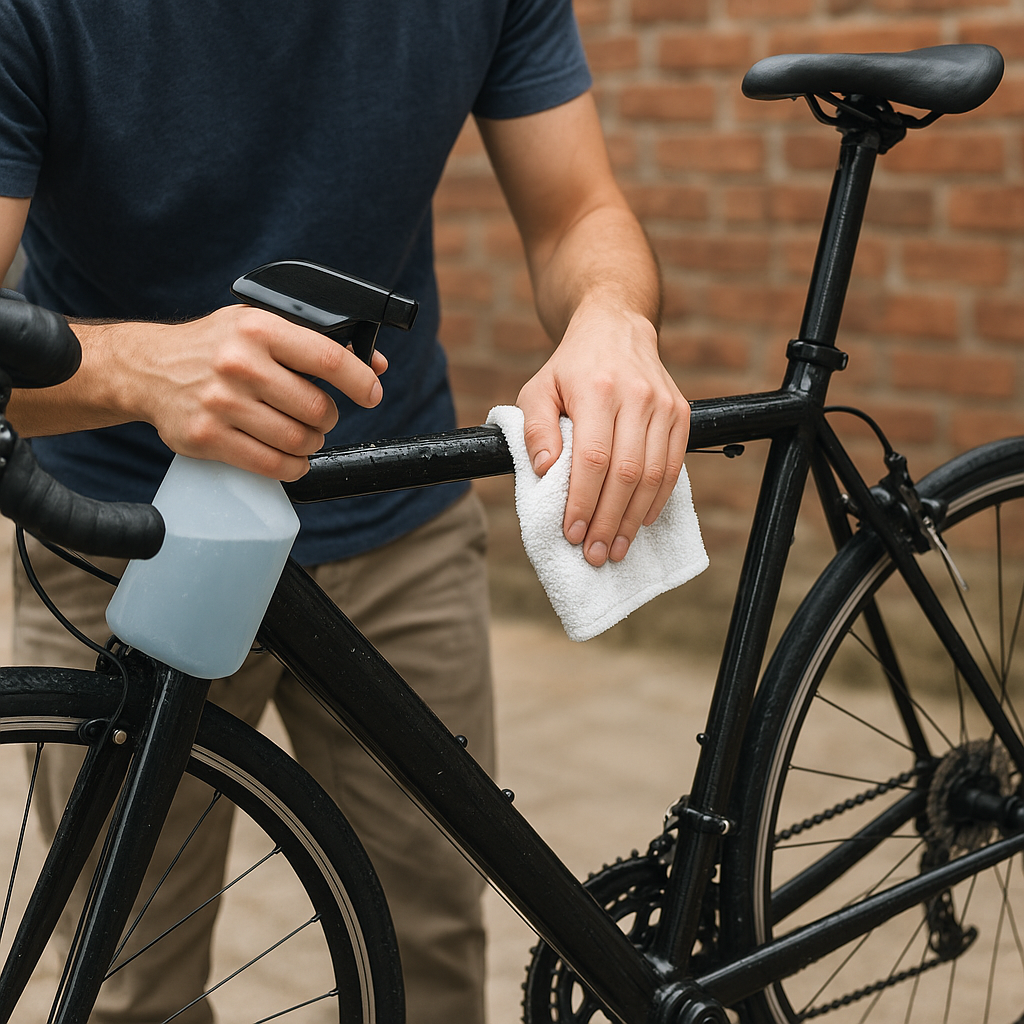
Mix the bike-specific soap or dishwashing liquid with water in a bucket. Dip your soft brush or cloth into the soapy solution and start at the top of the frame, working your way down. The goal is to prevent dirty water from settling on freshly cleaned areas.
- Use a large soft brush for broad sections of the frame.
- Switch to smaller brushes or toothbrushes for tight spots like cable mounts and bosses.
3. Degreasing the Drivetrain
The drivetrain is where most grime builds up. Follow these steps for a thorough degreasing:
- Apply degreaser liberally to the chain, chainrings, cassette, and jockey wheels.
- If using a chain cleaning tool, fill it with degreaser and run the pedals backward until the chain is clean.
- For a manual approach, let the degreaser soak for a few minutes, then scrub with a toothbrush or stiff nylon brush.
- Rinse off the degreaser completely with a gentle stream of water.
4. Detailed Scrubbing
Return to the soapy solution for a final scrub of the entire bike. Pay attention to areas prone to dirt accumulation, such as:
- Under the bottom bracket shell
- Inside the fork crown
- Brake calipers and pads
- Suspension pivots and seals (if applicable)
Use a toothbrush or a detail brush to ensure every nook and cranny is clean. Rinse thoroughly when finished.
5. Drying
Proper drying prevents rust and water spots. Use a clean, lint-free microfiber cloth to blot and wipe down the bike. Rotate the wheels to access spokes and hubs. Pay special attention to the protection of bearings by eliminating excess moisture around pivot points and seals.
Post-Cleaning Maintenance and Lubrication
Lubricating the Chain
Once the bike is completely dry, it’s time to apply lubricant. Follow these tips:
- Choose wet lube for rainy or muddy conditions and dry lube for dusty, arid environments.
- Apply a small drop of lube to each chain link while slowly turning the crank backward.
- Let the lube penetrate for a few minutes, then wipe off any excess with a clean cloth to avoid attracting dust.
Protecting the Frame and Components
For an extra layer of shine and corrosion resistance, consider using a bike-specific polish or protectant. Apply it sparingly to the finish of the frame and wiped down components. Buff lightly with a soft cloth for a streak-free shine.
Inspecting for Wear and Damage
Use your cleaning session as an opportunity to check for worn or damaged parts:
- Inspect brake pads for thickness and wear indicators.
- Check tire tread and sidewalls for cuts or bulges.
- Examine cables and housing for fraying or kinks.
- Ensure quick releases and thru-axles are properly tightened.
Advanced Tips and Best Practices
For cyclists who want to take their cleaning routine further, here are some advanced strategies:
Ultrasonic Cleaning for Small Parts
Ultrasonic cleaners can effectively remove stubborn grease from small components like chains, derailleur pulleys, and cassette cogs. Place parts in a dedicated basket submerged in cleaning solution, and run a short cycle for a deep clean.
Chain Longevity Monitoring
Use a chain wear indicator tool regularly to measure chain stretch. Replacing a chain at the right time can save you money on expensive cassette and chainring replacements.
Suspension Service Intervals
If you ride off-road or in harsh conditions, adhere to your suspension manufacturer’s recommended service intervals. Cleaning seals and re-greasing pivots can preserve shock performance and prevent costly repairs.
Conclusion
A consistent and thorough cleaning routine is one of the most impactful ways to maintain your bicycle’s performance, safety, and durability. By assembling the right tools, following a step-by-step process, and applying targeted maintenance, you can enjoy a smoother, more efficient ride and prolong the life of your two-wheeled companion.