Embarking on an adventure with your bicycle opens up a world of exploration, but transporting it from point A to B can feel like a daunting task. Whether you’re jetting across continents, hopping on a regional train, or cruising down the highway, proper planning and the right gear will ensure your ride arrives safely and ready for the next journey. This guide dives into the key considerations for each mode of travel, offering practical tips and expert advice to simplify the process.
Packing Your Bike: Essential Preparations
Before you decide on a plane, train, or car, begin by preparing your bike. A well-packed bicycle reduces the risk of damage and saves you time during inspections or unloading. Start by giving it a thorough clean—removing dirt and grime not only prevents scratches but also complies with many airline and train regulations.
Tools and Disassembly
- Allen wrenches and a pedal spanner for removing pedals and handlebars
- Tire levers to deflate and pack tires separately
- Zip ties or Velcro straps to keep small parts organized
Many transport services require you to dismantle at least part of the bike—typically the front wheel and handlebars. Label cables and small components to speed up reassembly later. Keep a compact tool kit on hand for any last-minute adjustments.
Protective Materials
- Padding: Bubble wrap or foam sleeves for the frame and fork
- Hard-shell case or cardboard box designed for bicycles
- Plastic wrap or zip-ties to secure moving parts
Investing in a purpose-built bike box or case can be pricey, but it offers unmatched protection and can double as luggage on many airlines. For train or car travel, a sturdy cardboard bike box might suffice, offering a budget-friendly alternative.
Traveling by Plane: Tips and Regulations
Air travel poses the greatest challenge due to strict regulations and fees. Each airline has its own policy for sports equipment, so verify requirements well in advance.
Booking and Fees
- Notify the airline of your bike when booking to reserve space in the cargo hold.
- Expect an oversized baggage fee ranging from $50 to $200 one way.
- Some carriers allow bikes under a combined weight limit to waive extra charges.
Always weigh your packed bike before heading to the airport. Overweight charges can be steeper than oversized fees.
Packing for Airlines
- Remove or deflate tires to comply with pressurization rules.
- Protect the frame, derailleur, and other fragile parts with adequate padding.
- Seal the case with durable tape and attach a label with your contact information.
Arrive early at check-in to allow time for special handling. Photograph your bike before handing it over to document its condition.
Traveling by Train: Effective Strategies
Trains often offer a less restrictive environment for transporting a bike, but policies vary by operator and country. Some regional services provide dedicated bicycle compartments, while high-speed trains may require full disassembly.
Reservation and Storage
- Book a seat in a car with bicycle storage or reserve a spot in a luggage van.
- Check if a folded or partially disassembled bike qualifies as carry-on luggage.
- Verify time windows for loading and unloading to avoid missing your train.
On many European routes, folding bikes can travel free of charge if stowed under the seat or in overhead racks. Always arrive at the station early to secure the best storage spot.
Minimal Disassembly
Compared to air travel, trains may allow you to skip full disassembly. Simply remove the front wheel and turn the handlebars sideways. Use a compact cover or soft bag to contain any grease or protruding parts that could damage other luggage.
Transporting Your Bike by Car: Road Trip Considerations
Hitting the road with your bike offers maximum flexibility. Whether strapped to a rack or nestled inside an SUV, automotive travel can be the most straightforward option—provided you choose the right setup.
Bike Rack Types
- Hitch-mounted racks: Stable and easy to load but require a receiver tow hitch.
- Roof racks: Secure and offer clear rear visibility, though lifting heavy bikes overhead can be challenging.
- Trunk-mounted racks: Inexpensive and no special installation but may obstruct tailgate access.
Ensure the rack is rated for your bike’s weight. After mounting, pull on the bike to test for wobble or looseness.
Securing and Protecting Your Bike
- Tie-down straps to prevent lateral movement.
- Use frame pads to eliminate metal-on-metal contact.
- Lock your bike to the rack with a U-lock or cable lock for added security.
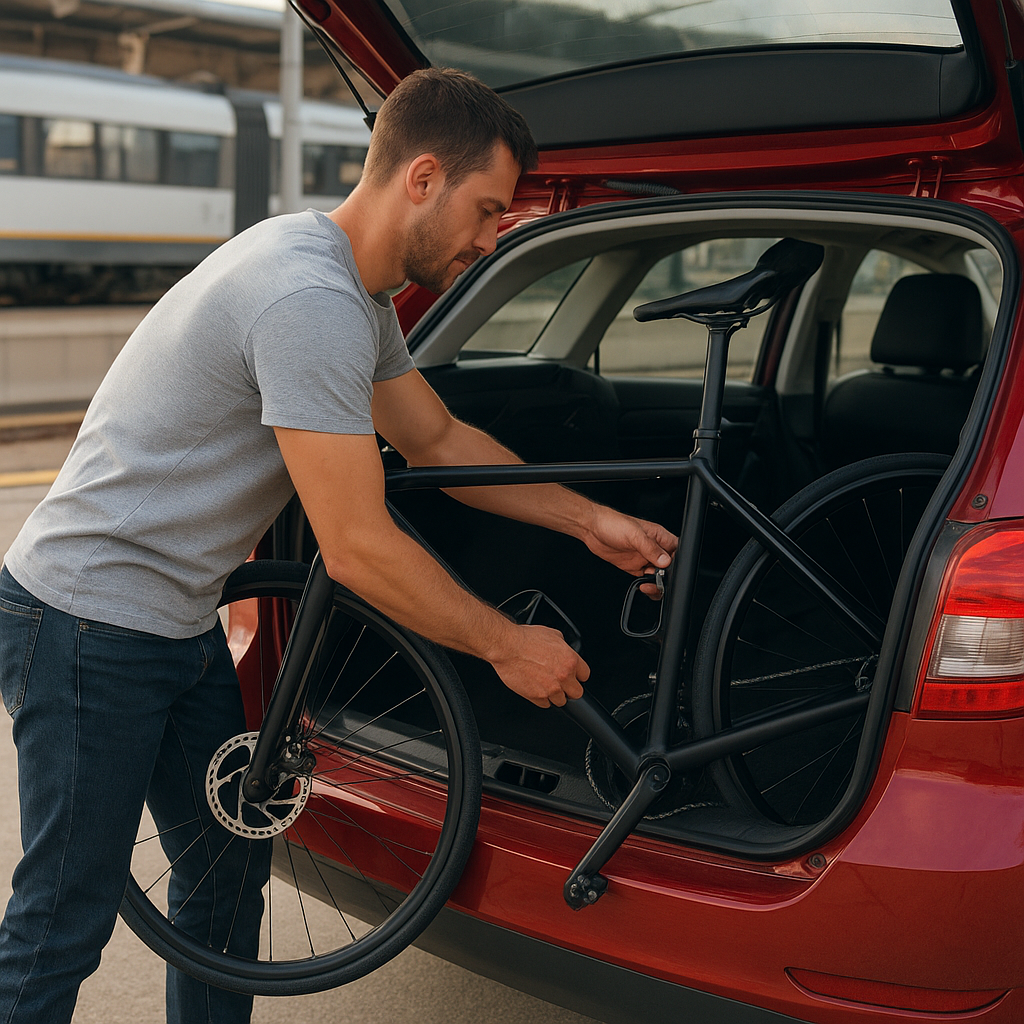
If you have extra space, place your bike inside the vehicle. Fold down seats and lay down a protective blanket or foam mat. Cover pedals and handlebars to safeguard interior surfaces.
On the Road
Check your bike and rack periodically during long drives. Vibrations and wind resistance can shift even the most secure setups. Listen for rattling noises and pull over to tighten straps if necessary. A short pre-trip drive around the block can reveal weak points before you embark on the highway.