Riding after dusk transforms the familiar streets into a playground of shadows and contrasts, demanding a keen focus on safety and preparedness. When the sun dips below the horizon, a cyclist’s best allies are high-performance lighting systems and gear designed to enhance visibility and reliability. This exploration dives deep into the world of bike lights and reflective accessories, equipping riders with the knowledge to choose products that maximize safety and comfort during nighttime adventures.
Selection of High-Performance Bike Lights
Front Lights: brightness and beam patterns
Front lights serve the dual role of illuminating the path ahead and alerting others to your presence. Key factors to consider include:
- Lumens: Measure of brightness. A range between 400 and 1200 lumens is ideal for city streets, while off-road trails may demand 1500+ lumens.
- Beam pattern: Focused beams cut through darkness, while wide-angle beams light up peripheral obstacles.
- Battery life: Look for rechargeable units offering at least two hours of continuous high-output mode.
- Durability: Water-resistant and shockproof casings withstand rain and bumpy terrains.
- Weight and size: Compact, versatility-oriented designs simplify installation and transport.
Rear Lights: staying visible from behind
Maintaining a constant presence on busy roads means investing in a quality rear light. Features to compare:
- Multiple flash modes: Strobe, pulse, and steady settings cater to different traffic environments.
- Mounting options: Seatpost, saddle rails, or helmet brackets ensure the light remains in the motorist’s line of sight.
- Slim profile: A low-profile design enhances aerodynamic performance without compromising on brightness.
- Battery indicators: LED or digital readouts alert you when it’s time to recharge.
- Waterproof rating: An IPX5 or higher certification keeps the light operational through heavy showers.
Mounting Strategies for Optimal Coverage
Precise mounting ensures that lights stay firmly in place, pointing exactly where you need them:
- Handlebar mounts: Adjustable clamps that rotate and tilt to direct beams at various angles.
- Helmet mounts: Ideal for riding off-road, illuminating the trail wherever your head turns.
- Fork and frame attachments: Additional side-facing lights boost lateral visibility.
Reflective Gear to Complement Your Lights
Reflective Clothing and Accessories
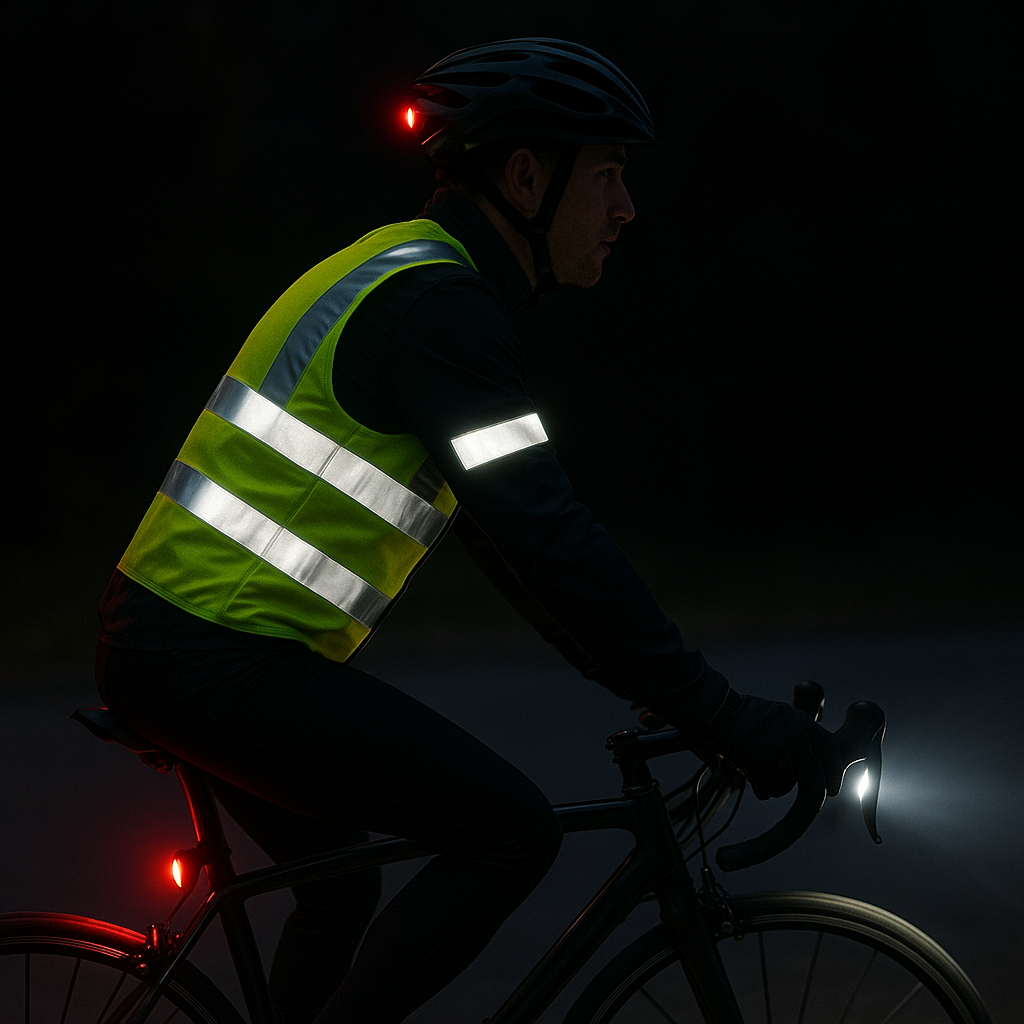
While powerful lights pierce through darkness, reflective garments send back beams from headlights, making you unmistakable:
- Jackets and vests with 3M Scotchlite strips for maximum light return.
- Reflective arm and ankle bands that accentuate limb movement, drawing driver attention to your motion.
- Gloves with reflective fingertips to signal turns clearly.
- Breathable fabrics that maintain comfort without sacrificing durability.
Reflective Helmets and Backpacks
Helmets and packs often offer large reflective surfaces close to eye level:
- Full-coverage helmet decals that remain bright in low-light conditions.
- Backpacks with reflective panels and piping along seams.
- Built-in LED strips on backpacks for added visibility.
- Modular attachments allow switching between daytime cargo hauling and nighttime safety modes.
Reflective Stickers and Tape
For those on a budget or seeking a quick upgrade, adhesive reflective elements can be applied nearly anywhere:
- Striped tape on wheel rims and fork legs to create a spinning halo effect when moving.
- Small decals on pedals and crank arms to catch headlights.
- Flexible bands that wrap around frame tubes for a clean installation.
Making Your Night Rides Safer and More Enjoyable
Battery Maintenance and Power Management
Nothing dims the spirit of night riding faster than a drained light. Adopt these habits:
- Charge lights fully before each ride, monitoring battery health over months of cycles.
- Carry a compact power bank or backup light for extended outings.
- Use eco or low-power modes when navigating well-lit sections to stretch runtime.
- Inspect connectors and charging ports for debris or corrosion to maintain optimal electrical contact.
Recommended Riding Practices
Equipping yourself with the right gear is only half the battle; how you ride matters equally:
- Plan routes in advance, prioritizing roads with sufficient street lighting and minimal traffic.
- Do a quick pre-ride check: test all lights, confirm reflective strips are clean, and ensure mounts are secure.
- Maintain a steady pace in darkness to better anticipate road hazards.
- Use hand signals clearly and early, giving motorists and fellow cyclists ample time to react.
Troubleshooting Common Issues
Even top-tier equipment can face glitches. Address them swiftly:
- Flickering lights often indicate loose connections—tighten mounts and wiring.
- Rapid battery drain could mean extreme temperatures; store and pre-warm lights in cold weather.
- Water ingress causing dimming or corrosion—dry and lubricate seals after wet rides.
- Uneven beam output may require lens cleaning or internal realignment.
Additional Tips for Extreme Conditions
When visibility is further compromised by fog, rain, or snow, extra precautions help keep you safe:
- Pair a wide-angle flood light with a focused spot beam to handle varying distances.
- Increase reflector coverage on both clothing and equipment to combat diffuse light scattering.
- Wear anti-fog visors or glasses to maintain clear vision.
- Consider heated grips or gloves to preserve dexterity in sub-zero temperatures.