Selecting a mountain bike that suits your riding style and local trails can be both exhilarating and daunting. With countless models, features, and price points, understanding the fundamentals will ensure you invest wisely. This guide covers essential aspects—from terrain considerations to component choices—so you can enjoy every off-road adventure with confidence and performance.
Understanding Your Riding Style and Terrain
Every mountain biker has a preferred style. Before diving into specifications, ask yourself:
- Do you favor fast, flowy trails or technical, rocky descents?
- Are you planning long all-day rides or short uphill sprints?
- Will you tackle singletrack paths, gravel roads, or bike park jumps?
Answering these questions helps define the type of bike that matches your ambition. Consider the following categories:
Cross-Country (XC)
- Lightweight frame for efficient climbing
- Narrower suspension travel (80–120 mm)
- Emphasis on durability and pedaling efficiency
XC bikes excel on smooth, rolling trails where speed and endurance matter most. They often feature minimalist designs to reduce weight and improve power transfer.
Trail
- Medium suspension travel (120–150 mm)
- Balanced geometry for climbing and descending
- Versatile enough for varied terrain
Trail bikes strike a harmony between uphill efficiency and downhill control. They’re ideal for riders seeking a single bike for most types of off-road terrain.
Enduro and All-Mountain
- Longer suspension travel (150–170 mm)
- Slacker head tube angles for stability at speed
- Robust build for aggressive riding
If adrenaline-fueled descents and big hits are your passion, an enduro bike offers the strength and traction needed for technical runs without sacrificing too much climbing efficiency.
Downhill (DH)
- Very long suspension travel (170–200 mm)
- Highly slack geometry optimized for descending
- Reinforced chassis to withstand heavy impacts
Downhill bikes are purpose-built for gravity-fed tracks and bike parks. Their reliability and stability at high speeds make them unsuitable for long climbs but unbeatable on steep descents.
Frame Materials and Suspension Types
The frame is the backbone of your mountain bike, influencing weight, stiffness, and ride feel. Suspension soaks up bumps, giving you control over rough ground.
Frame Materials
- Aluminum: Affordable and strong. Slightly heavier but easy to repair.
- Carbon Fiber: Lightweight with excellent vibration damping. Higher cost and more delicate to crash impacts.
- Steel: Classic feel, durable, and reparable. Tends to weigh more than other materials.
- Titanium: Combines lightness and resilience but uses the highest budgets.
Choose a frame based on your budget, desired weight, and comfort preferences. Carbon fiber remains popular for its blend of flexibility and stiffness, while aluminum offers a cost-effective entry point for many riders.
Suspension Systems
Mount your wheels to either a hardtail or a full-suspension system:
- Hardtail: Front suspension only. Affordable, low maintenance, and efficient pedaling. Ideal for XC and entry-level trail bikes.
- Full-Suspension: Both front and rear shock absorbers. Enhanced comfort and control across rough terrain. Suitable for trail, enduro, and downhill riding.
Shock quality and kinematics play crucial roles in how a full-suspension bike performs. Look for models with adjustable rebound and compression settings to fine-tune your ergonomics and ride feel.
Wheel Sizes, Gearing and Brakes
Wheels, drivetrain, and braking choices directly affect traction, speed, and control. Familiarize yourself with industry trends:
Wheel Diameter
- 27.5” (650B): More agile and easier to maneuver. Preferred by smaller riders or technical trail enthusiasts.
- 29”: Better rollover ability, higher inertia, and improved traction. Favored by XC and trail riders seeking momentum and stability.
- Mixed (Mullet) setups: Combine a 29” front with a 27.5” rear for agility and rollover advantages.
Drivetrain and Gearing
- 1x systems (single chainring): Reduced weight, simpler shifting, and cleaner chain lines. Common in modern trail and enduro bikes.
- 2x systems: Wider gear range for steep climbs and high-speed sections. Popular in XC and touring contexts.
- 12-speed cassettes: Offer closely spaced ratios for smoother cadence transitions.
Pick a drivetrain that balances simplicity with the gearing range you need for local gradients.
Braking Performance
- Hydraulic Disc Brakes: Superior modulation, consistent stopping power in wet conditions, and low maintenance.
- Mechanical Disc Brakes: More budget-friendly, easier to service, but less consistent bite compared to hydraulics.
Hydraulic systems are now the standard for most mountain bikes, providing the control essential for technical descents.
Fit, Test Rides, Budget and Essential Accessories
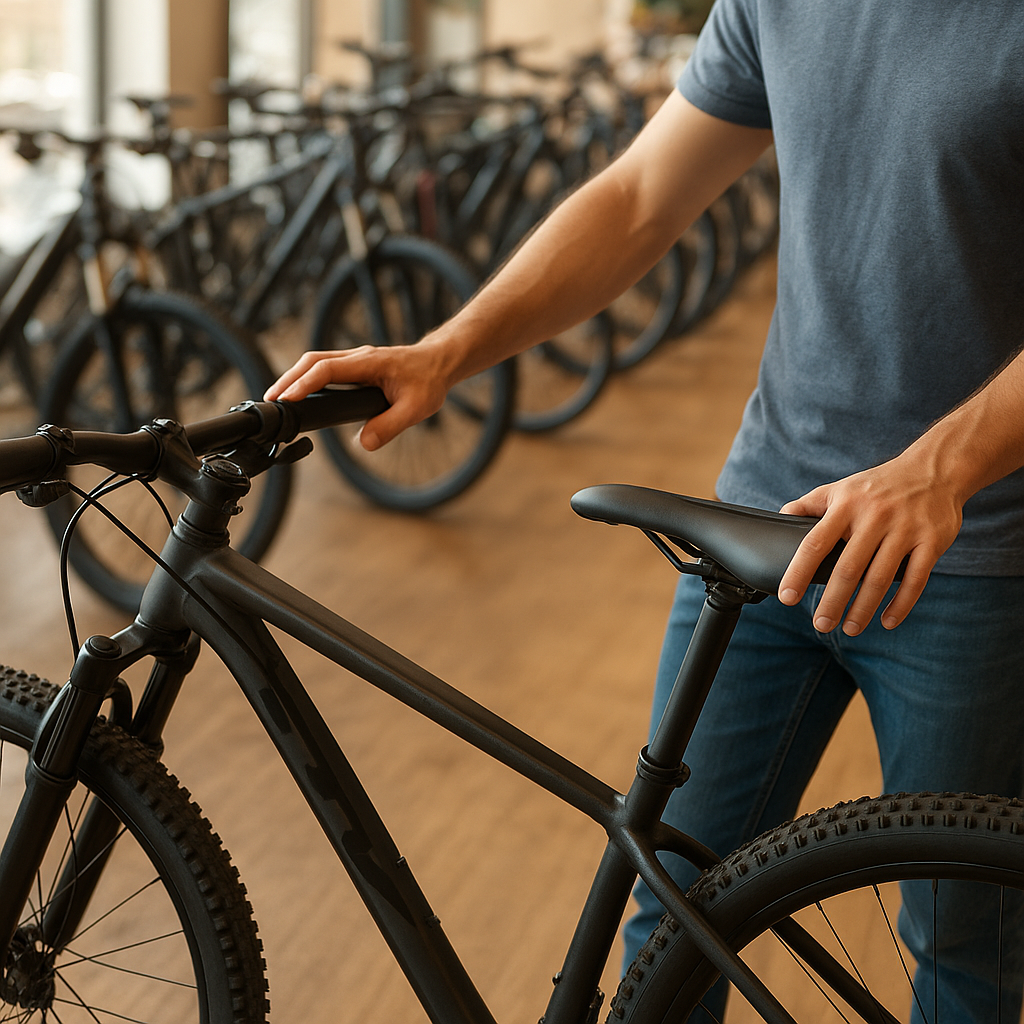
A properly sized bike is critical for comfort and injury prevention. Never purchase without trying multiple sizes and models.
Finding the Right Fit
- Stand-Over Height: Ensure sufficient clearance between your inseam and the top tube for safety.
- Reach and Stack: Key measurements affecting cockpit comfort and handling. A longer reach positions you forward, enhancing stability at speed.
- Handlebar Width and Stem Length: Influence leverage and handling precision.
Local dealers often allow demo rides—take advantage to compare geometry and ride feel. Pay attention to how the bike corners, climbs, and descends in real conditions.
Budget Considerations
Bikes range from budget-friendly hardtails at under $1,000 to high-end carbon full-suspension models priced above $8,000. Allocate funds wisely:
- Frame and suspension should take priority—upgrading wheels or drivetrain later is easier than switching frames.
- Shop previous-year models to score discounts without sacrificing versatility.
- Factor in maintenance costs: tires, drivetrain wear, brake pads, and suspension servicing.
Essential Accessories
Completing your setup with the right accessories ensures safety and convenience:
- Helmet: A certified helmet is non-negotiable for any ride.
- Pedals: Clipless for efficiency or flat pedals for technical terrains.
- Hydration Pack or Bottle Cages: Stay fueled on longer rides.
- Protective Gear: Knee pads, gloves, and goggles for enduro or downhill sessions.
- Toolkit and Spare Tube: Essential for on-trail repairs.
Invest in quality gear that aligns with your discipline to maximize safety and comfort.