Embarking on a two-wheeled journey through rugged trails and steep inclines demands more than just a love for outdoor thrills. Every rider must equip themselves with the right gear to ensure safety, performance, and lasting enjoyment. Below, we delve into the must-have items that transform a simple ride into an unforgettable expedition.
Essential Ride Components
Frame and Fork
Your choice of a mountain bike frame and fork dictates overall handling and ride quality. Lightweight aluminum or carbon frames provide agility, while steel offers unmatched durability. Mid- and long-travel forks absorb impact when descending rocky terrain. Look for adjustable damping and lockout features to fine-tune your suspension to trail conditions.
Suspension System
A quality suspension setup keeps your wheels planted, improving traction and reducing rider fatigue. Cross-country enthusiasts often opt for 120–140mm travel forks, whereas enduro riders prefer 150–170mm. Rear shocks come in air or coil variants—air shocks are lighter and more tunable, while coil shocks excel in consistent small-bump compliance.
Wheels and Tires
Strong rims and resilient spokes withstand repeated hits on rocky descents. Combined with tubeless-ready hubs, they allow you to run lower tire pressures, boosting grip and reducing punctures. Choose tires with aggressive tread patterns for muddy or loose surfaces, or semi-slick options for hard-packed trails. High-volume casings provide extra sidewall support when cornering at speed.
Protection and Safety
Helmet and Eye Protection
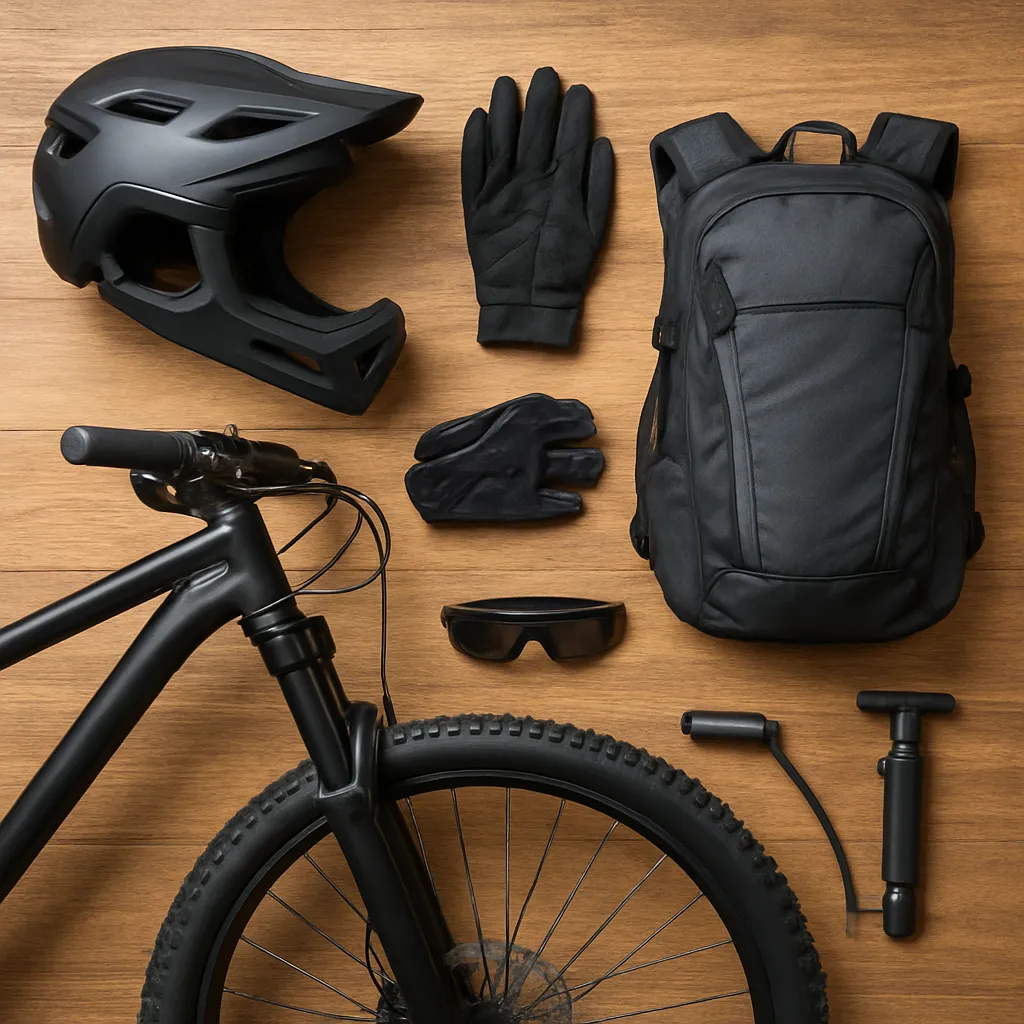
No piece of equipment is more critical than a helmet. Modern designs incorporate MIPS or SPIN systems for rotational impact protection, along with extended coverage around the temples and occipital area. Pair your helmet with shatterproof goggles or sunglasses featuring interchangeable lenses for varying light conditions.
Body Armor
For aggressive rides, invest in knee and elbow guards with D3O or similar impact-absorbing inserts. Chest protectors and spine shields are recommended for downhill runs, where high-speed crashes can occur. Many riders choose ventilated armor that balances protection with airflow, preserving comfort on hot days.
Gloves and Footwear
Padded gloves reduce hand fatigue and protect against abrasions during slides. Choose designs with reinforced palms and touchscreen-compatible fingertips. Shoes with stiff soles maximize power transfer to the pedals, while grippy rubber outsoles maintain traction on flat platforms. Clipless pedals paired with matching shoes deliver precision control in technical sections.
Hydration, Nutrition, and Tools
Hydration Solutions
Staying hydrated is vital on long excursions. Hydration packs with 2–3 liter reservoirs keep water accessible without stopping. Alternatively, frame-mounted bottles suit shorter rides. Some riders add electrolyte blends or energy gels to combat fatigue and muscle cramps.
On-Trail Maintenance
- Multi-tool: Compact tools with Allen keys, Torx bits, and a chain breaker.
- Spare Tubes or Patch Kit: Tubeless plugs for sealant-embraced setups or standard patches for tube repairs.
- Mini Pump or CO₂ Inflator: Rapid tire inflation after fixing a puncture.
- Chain Lube: Fast-drying, dirt-repelling formula to maintain drivetrain performance.
Nutrition Essentials
Pack energy bars, dried fruit, or gels for quick carbohydrate boosts. Trail mix and nut butter packets supply healthy fats and proteins. Organize snacks in easy-access jersey pockets or a handlebar bag to stay fueled during extended adventures.
Comfort and Convenience Accessories
Seating and Handlebars
A padded saddle with ergonomic cutouts prevents numbness on long rides. Bar grips made of silicone or memory foam absorb shocks and reduce hand fatigue. Adjustable stems and handlebars help you find a balanced riding position, minimizing strain on wrists and lower back.
Lighting and Visibility
Front lights with 1000+ lumens illuminate dark trails, while rear lights ensure you remain visible to other riders or vehicles. Some systems offer integrated battery packs that power both lighting and charging ports for electronics.
Navigation and Communication
GPS cycling computers display real-time metrics such as speed, distance, and elevation. Mapping apps guide you through unfamiliar territory, while a compact phone mount keeps your device accessible. Two-way radios or smartphones with group-chat apps maintain communication with fellow riders during remote outings.
Preparation for Every Adventure
Clothing and Weather Readiness
Technical jerseys and shorts wick moisture, dry quickly, and minimize chafing. Layering with a lightweight windbreaker or waterproof shell prepares you for sudden weather changes. Consider convertible pants or jackets with zip-off sleeves for variable trail conditions.
Fitness and Skill Development
Beyond equipment, your physical conditioning and riding technique determine trail success. Core strengthening, flexibility routines, and interval training enhance power and endurance. Practice technical skills such as cornering, bunny hops, and rock rolls in controlled environments before tackling challenging terrain.
Sustainability and Trail Stewardship
Respect trail etiquette by yielding where appropriate, avoiding wet or overly eroded paths, and packing out all trash. Choose environmentally responsible gear materials when possible, and support organizations that maintain and expand trail networks. By preserving the natural landscapes we ride, we ensure that future generations can pursue their own adventure on two wheels.